
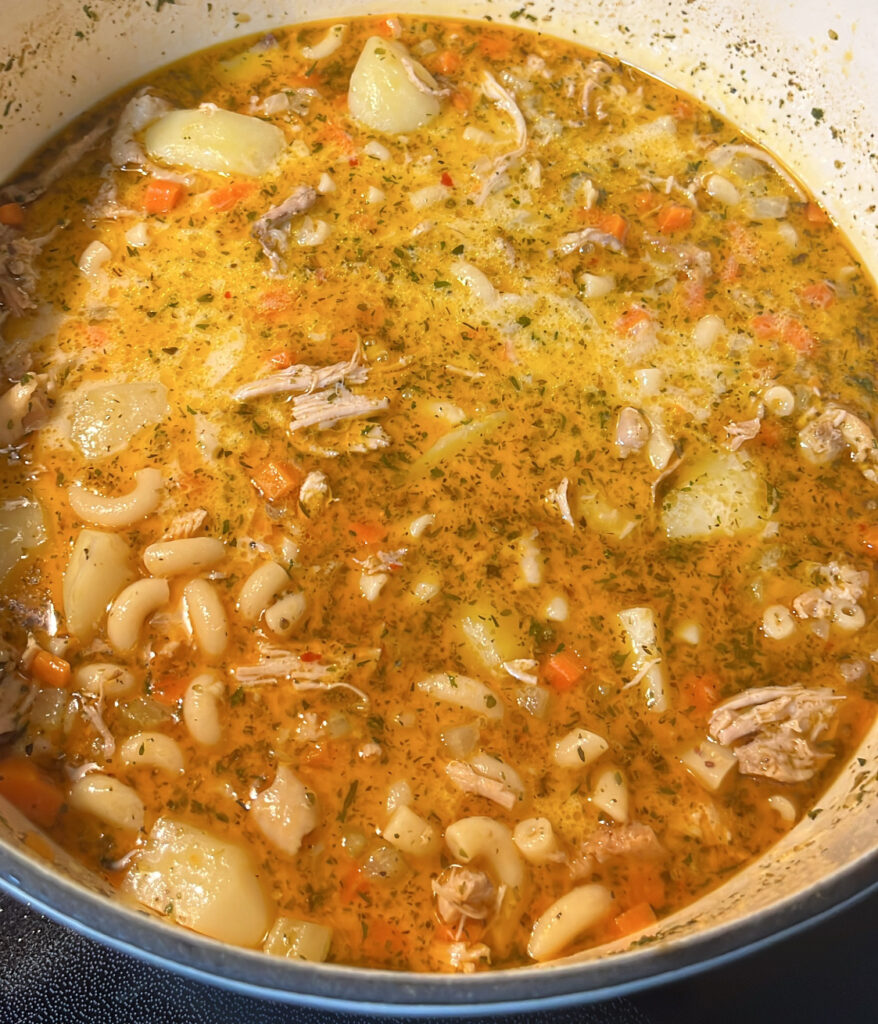
This soup has a creamy texture from the eggs, a bright and a tangy flavor from the lemon, and has a heartiness from the rice. Honestly, this recipe scared me just because it was the first time I ever tempered eggs and was worried I'd end up with scrambled egg soup. After some research I found out that if you slowly incorporate the broth and whisk the eggs in you will end up with a rich hearty soup. This recipe is perfect for winter when you want something warm and filling that feels like a nice hug.
In a large pot or a dutch oven, heat 1 tbsp olive oil.
Season the chicken thighs with salt and pepper and then sear the chicken thighs for 5 minutes on each side in the pot. Once the chicken thighs are golden, set the chicken aside for later.
In the same pot, sauté the carrots, celery and onions until fragrant and then toss in the garlic.
Add the salt, pepper, Italian seasoning, oregano and chicken broth to the pot. Throw in the bay leaves, chicken bouillon cube, and lemon zest and then mix well.
Return the chicken thighs back to the pot together with the rice and cook for 20 minutes covered.
Remove the cooked chicken thighs and shred.
To prepare the Avgolemono mixture, whisk together 2 eggs in a bowl. To temper the eggs, take 1 cup of hot broth from the pot and slowly pour it in a thin stream into the whisked eggs while constantly whisking the eggs and broth so the eggs don't curdle and become scrambled eggs.
Once the egg mixture is fully combined, add it back to the pot in a small gentle stream while constantly mixing the pot.
Add the lemon juice to the soup followed by the shredded chicken. Mix well and simmer for 10 minutes covered.
Serve the soup hot and garnished with pepper and olive oil (optional).
Rice: Wash the rice throughly until the water drains clear. Washed rice ensure that your rice doesn't get gummy and sticky while cooking.
Storage: Let it sit to cool down before storing it in the fridge. This soup is good for 5-7 days in the fridge.
Freezer: If you have a lot of leftovers you can freeze it, but allow to cool down before you freeze it.
At the heart of avgolemono is the egg-and-lemon sauce, which gives the soup its name. In Greek, “avgo” means egg and “lemono” means lemon. This cooking technique—combining eggs and lemon juice with warm broth to create a creamy sauce—has deep roots in Mediterranean cuisine.
Food historians believe the egg-lemon sauce likely evolved from dishes made by Sephardic Jews, who were expelled from Spain during the Alhambra Decree. As these communities settled across the Ottoman Empire, they brought with them a sauce known as agrístada, an egg-and-citrus sauce used to thicken soups and stews.
Over time, the egg-lemon technique became widely adopted in Greece, where cooks began incorporating it into chicken broth and rice-based soups. Greek cuisine, already rich with citrus, herbs, and olive oil, embraced the bright flavor of lemon as a natural complement to savory dishes.
The result was avgolemono soup as it’s known today—a hearty yet refreshing dish combining chicken broth, rice or orzo, and the signature egg-lemon mixture.
Throughout the centuries, avgolemono became a staple in Greek households. It’s commonly served as a starter during family meals and festive gatherings, and it’s also known as a comforting remedy when someone is feeling unwell.
Because the soup uses simple ingredients—eggs, lemons, broth, and grains—it became popular as a nourishing meal that could be prepared with ingredients most households already had on hand.
Today, avgolemono is one of the most recognizable dishes in Greek cuisine. It appears in homes, tavernas, and restaurants throughout Greece and in Greek communities around the world.
While the classic version includes chicken and rice, modern variations may use:
Despite these variations, the heart of the dish remains the same: a smooth, creamy soup brightened by lemon and thickened naturally with eggs.
From its roots in Mediterranean culinary traditions to its place on modern dinner tables, avgolemono soup continues to represent the comforting simplicity and rich cultural heritage of Greek cooking.

Hi there. My name is Mckayla. I'm a big foodie who loves to cook food and loves to eat good food. I was born in South Africa and recently moved to the states. I have found my partner in crime and together we are making our newly bought house a home and traveling the world and trying different cuisines and flavors the world has to offer.
I found my passion for cooking in an unexpected way. When i was 20 I came to the United States to be an au pair. Cooking dinner for the kids I cared for sparked a love for creating delicious meals that bring joy to others. What started as a responsibility turned into a passion. Now I'm excited to share that passion with you through the blog.
The recipes that are share are easy and mouthwatering recipes that brings people together. I'm all about whipping up tasty meals that are perfect for busy days or special occasions. I hope my recipes give you the confidence you need to get creative in your own kitchen.


